1. Working Principle
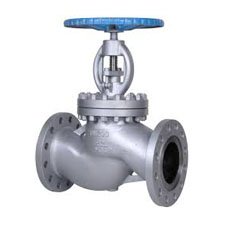
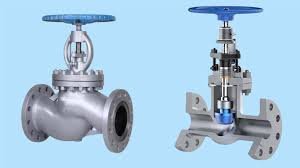
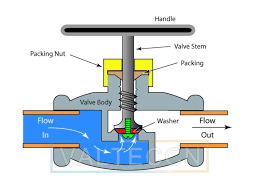
The globe valve operates by moving the disc perpendicular to the seat:
-
Throttling: As the handwheel is turned, the disc moves up or down. Because the distance between the disc and the seat changes gradually, the user can precisely control the volume of fluid passing through.
-
Path of Flow: The fluid enters the valve, turns 90 degrees to pass through the seat opening, and then turns 90 degrees again to exit.
-
Pressure Drop: This “tortuous” path creates significant resistance, leading to a much higher pressure drop compared to gate or ball valves.
2. Primary Use
The primary use of a globe valve is Flow Regulation (Throttling).
While it can provide a tight shut-off, its design is optimized for situations where you need to:
-
Adjust flow rates frequently and accurately.
-
Operate the valve often (it has less wear and tear on the seats than a gate valve).
-
Maintain a specific pressure or temperature by modulating flow.
3. Common Applications
Globe valves are the “workhorses” of control systems in various industries:
| Industry | Application |
| Steam Systems | Main steam stop valves and boiler feedwater systems where precise steam control is vital. |
| Cooling Water | Regulating the flow of coolant to heat exchangers or engines. |
| Chemical Plants | Precise metering of chemical additives or controlling flow to reactors. |
| Fuel Oil Systems | Controlling fuel flow to burners or heaters. |
| Water Treatment | Sampling lines and chemical injection points where small, controlled flows are needed. |