1. Working Principle
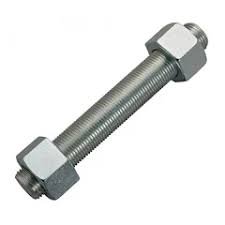
The nut works through the interaction of Friction and Elastic Tension:
-
The “Wedge” Action: A screw thread is essentially an inclined plane (a wedge) wrapped around a cylinder. As you turn the nut onto a bolt, you are “climbing” this plane.
-
Preload/Tension: As the nut hits the surface of the part being fastened, further turning starts to stretch the bolt elastically (like a very stiff spring). This stretching is called Preload.
-
Clamping Force: The tension in the bolt pulls the nut and the bolt head toward each other, compressing the parts between them.
-
Friction Lock: The pressure between the internal threads of the nut and the external threads of the bolt creates immense friction, which stops the nut from spinning backward on its own.
2. Primary Use
The primary use of a nut is to react to the load of a bolt to create a Clamping Force.
Unlike a screw (which creates its own threads in a material), a nut allows for:
-
Through-Bolting: Joining two or more parts that do not have their own threads.
-
Non-Permanent Connections: Allowing a joint to be assembled and disassembled many times without damaging the parts.
-
High Torque Application: Because nuts have external “flats” (the hex sides), they can be tightened with high-leverage tools like wrenches and impact guns to generate thousands of pounds of clamping force.
3. Common Applications
Nuts are used in virtually every mechanical assembly in the world:
| Type | Common Application |
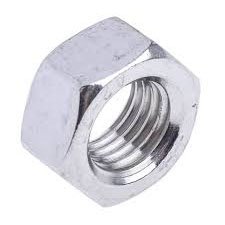
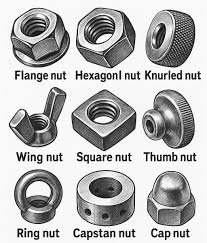
| Hex Nut | Standard construction, machinery, and furniture assembly. |
| Lock Nut (Nyloc) | Automotive suspension, lawnmowers, and vibrating machinery (prevents backing off). |
| Wing Nut | Drum kits, bicycle wheels, and battery terminals (frequent hand-tightening). |
| Flange Nut | Assembly lines (the built-in washer speeds up installation and protects the surface). |
| Coupling Nut | Joining two pieces of threaded rod (e.g., hanging HVAC ducts from a ceiling). |
| Castle Nut | Critical safety points like car axles; secured with a “cotter pin” so it cannot fall off. |
| Lug Nut | Securing wheels to a vehicle’s hub. |