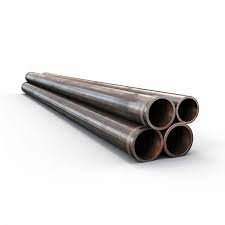
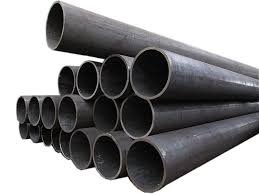
1. Working Principle (Manufacturing & Behavior)
The “working principle” of carbon steel pipe lies in its mechanical properties and how it is formed:
-
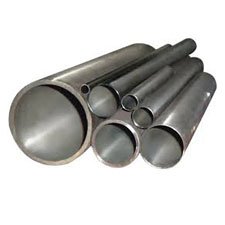
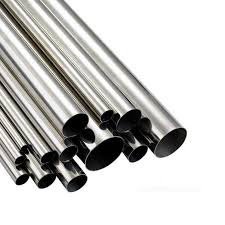
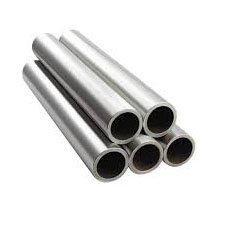
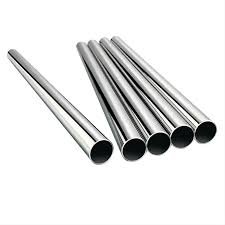
Manufacturing: Solid steel is either pierced to create a Seamless pipe or rolled and welded to create a Welded pipe.8
-
Stress Handling: Carbon steel has high tensile strength, meaning it can withstand significant internal pressure and external weight without deforming.9
-
Heat Response: It maintains its structural integrity at relatively high temperatures, though it can become brittle in extreme sub-zero conditions unless specific alloys are added.
2. Primary Use
The primary use of carbon steel pipe is the Mass Transport of Fluids and Gases and Structural Support.
It is the “gold standard” when:
-
Cost-Efficiency is vital: It is significantly cheaper than stainless steel or exotic alloys.10
-
Strength is a priority: It handles high-pressure environments better than plastic (PVC) or copper.
-
Durability is required: It has a long service life in environments that are not excessively corrosive.11
3. Common Applications
Carbon steel pipes are the literal “backbone” of industrial infrastructure:
| Industry | Application |
| Oil & Gas | Transporting crude oil and natural gas over thousands of miles (pipelines). |
| Construction | Structural piling, scaffolding, and building frames/columns. |
| Water Supply | Main water lines and firefighting systems (typically galvanized). |
| Manufacturing | Compressed air systems and steam distribution in factories. |
| Automotive | Chassis frames and heavy-duty exhaust components. |