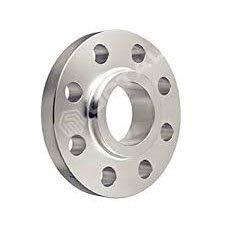
1. Working Principle
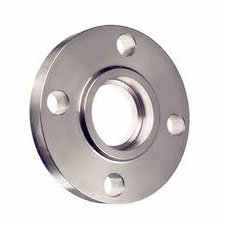
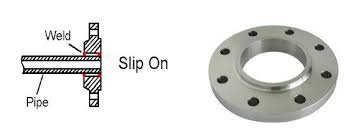
The working principle of a Slip-On flange is based on Double Fillet Welding:
-
Positioning: The pipe is inserted into the flange. Crucially, the pipe end is usually set back from the flange face by a distance equal to the pipe wall thickness plus 3mm. This prevents the weld bead from damaging the flange face.
-
Securing: A welder applies a fillet weld to the back of the flange (where it meets the pipe) and another fillet weld on the inside of the flange near the face.
-
Alignment: Because the flange can slide back and forth before welding, it is much easier to align with bolt holes on mating equipment than a butt-welded flange.
2. Primary Use
The primary use of a Slip-On flange is for Low-Pressure, Non-Critical Applications.
It is preferred over other flanges when:
-
Cost Savings are a priority (the flange itself is cheaper to manufacture than a Weld Neck).
-
Ease of Assembly is needed (less precision is required when cutting the pipe to length).
-
Space is limited (the shorter hub allows for tighter piping configurations).
3. Common Applications
Slip-On flanges are the “standard” for utility and light industrial piping:
| Industry | Application |
| Water Works | Municipal water lines and low-pressure cooling water systems. |
| HVAC | Chilled water and hot water circulation in commercial buildings. |
| Pneumatics | Low-pressure compressed air lines in factories. |
| Oil & Gas | Secondary “utility” lines (firewater, lubrication oil) where pressure is low. |
| Food & Beverage | Low-pressure transfer lines for non-hazardous ingredients. |