Working Principle: The working mechanism depends on the type of level gauge. Common mechanisms include:
1. Sight Glass Level Gauge
- A transparent glass tube is connected to the tank.
- The liquid level in the glass matches the tank level due to hydrostatic pressure.
- The visible liquid height indicates the level.
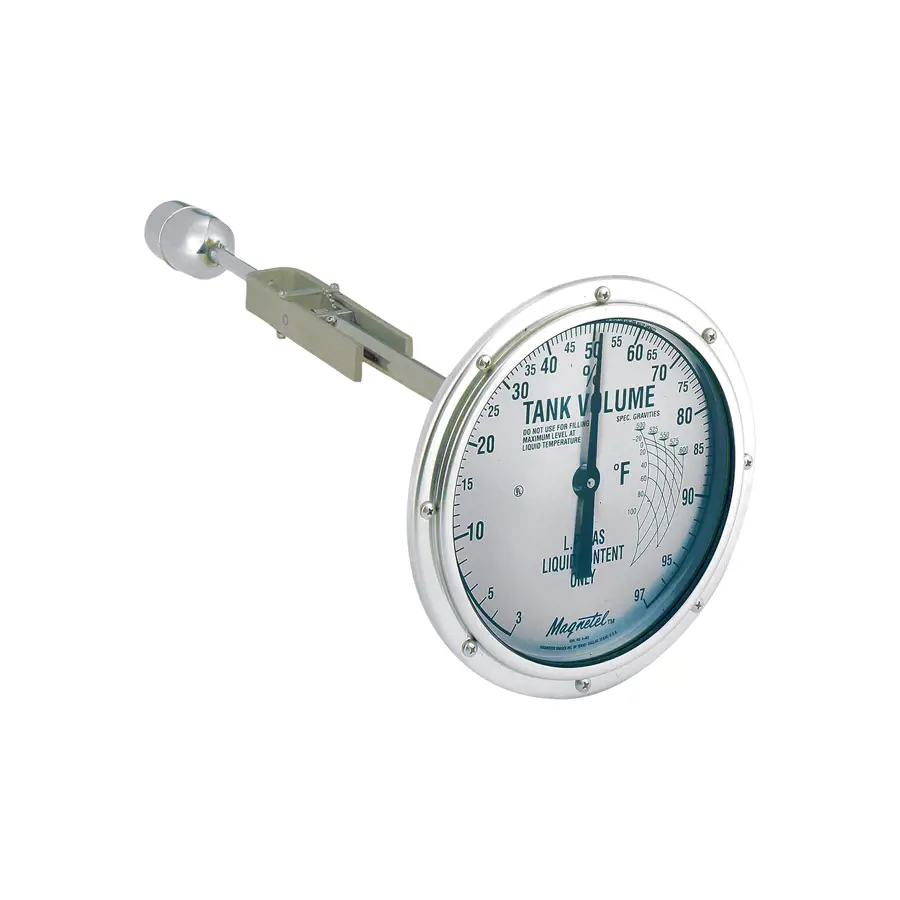
2. Float Type Level Gauge
- Uses a floating element that rises and falls with the liquid level.
- Float movement is transferred mechanically or magnetically.
- The position of the float indicates the liquid level on a scale.
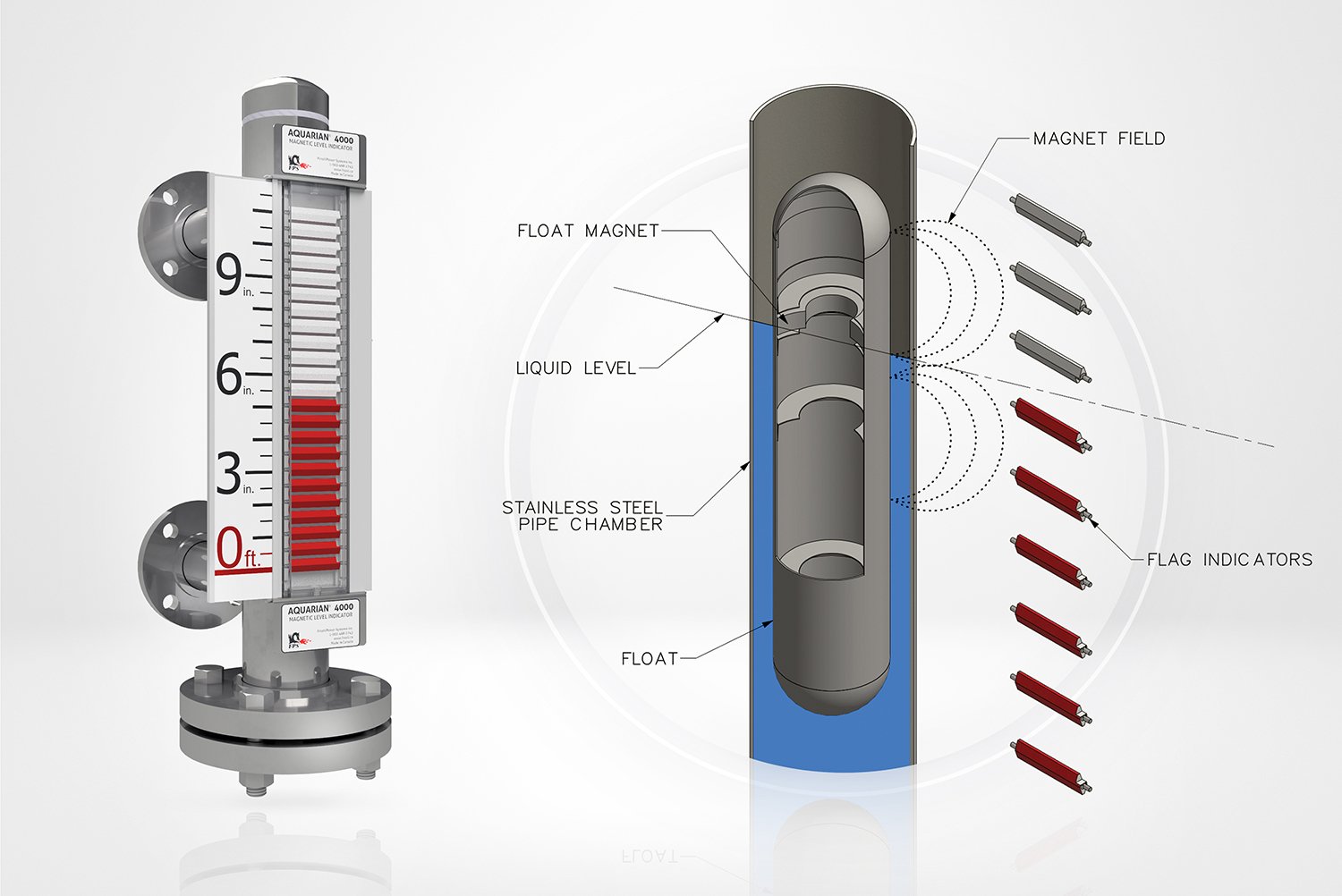
3. Magnetic Level Gauge
- A float containing a magnet moves with the liquid.
- External magnetic indicators flip to show the level.
- Suitable for high-pressure or hazardous fluids.
4. Electronic Level Gauges
- Use ultrasonic, capacitive, or radar sensors.
- Measure level without direct contact with the fluid.
Primary Use: The primary use of a level gauge is to monitor and control material level in tanks or vessels to:
- Prevent overflow or dry running
- Ensure process continuity
- Improve safety and inventory control
Common Applications: Level gauges are commonly used in:
- Water storage tanks
- Oil and fuel tanks
- Chemical and pharmaceutical industries
- Boilers and steam drums
- Food and beverage processing
- Wastewater treatment plants
- Power plants
- Marine and ship tanks