
1. Working Principle
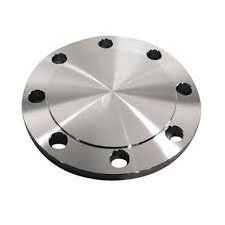
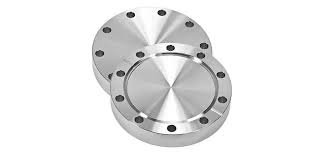
The blind flange works by creating a Mechanical Barrier:
-
Installation: It is placed at the end of a pipe run, matching the bolt pattern of the terminal flange. A gasket is inserted between the two faces.
-
Bolting: As the bolts are tightened, the gasket is compressed between the solid face of the blind flange and the open face of the pipe flange.
-
Pressure Containment: Once secured, the internal fluid hits the solid wall of the blind flange. The flange must be thick enough to resist the “bending stress” caused by the internal pressure trying to push the center of the disc outward.
2. Primary Use
The primary use of a blind flange is System Termination and Isolation.
It is specifically chosen for:
-
Sealing Ends: Closing off the end of a pipe that is no longer in use or is being reserved for future expansion.
-
Safety Isolation: Providing a physical, visible block during maintenance so that workers can safely enter a tank or repair a downstream valve without fear of fluid leakage (often called a “positive shut-off”).
-
Pressure Testing: Sealing sections of a new pipeline so it can be filled with water or gas to check for leaks and strength (hydrostatic testing).
3. Common Applications
Blind flanges are used across all heavy industries where liquid or gas is under pressure:
| Industry | Application |
| Refineries | Closing off heat exchanger nozzles and reactor manways during shutdowns. |
| Construction | Leaving “stubs” in a building’s plumbing or HVAC system for future floors or wings. |
| Offshore Oil | Sealing subsea pipe ends to prevent seawater entry or oil spills. |
| Water Treatment | Closing off pump discharge lines when a pump is removed for repair. |
| Chemical Plants | Isolating storage tanks from main production lines during cleaning. |