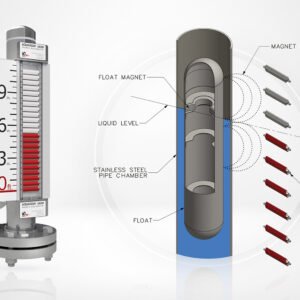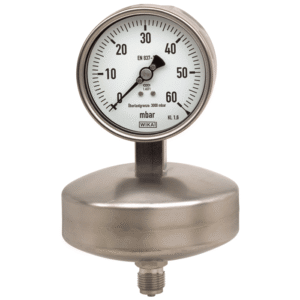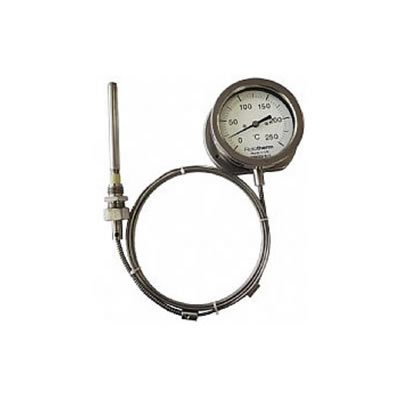
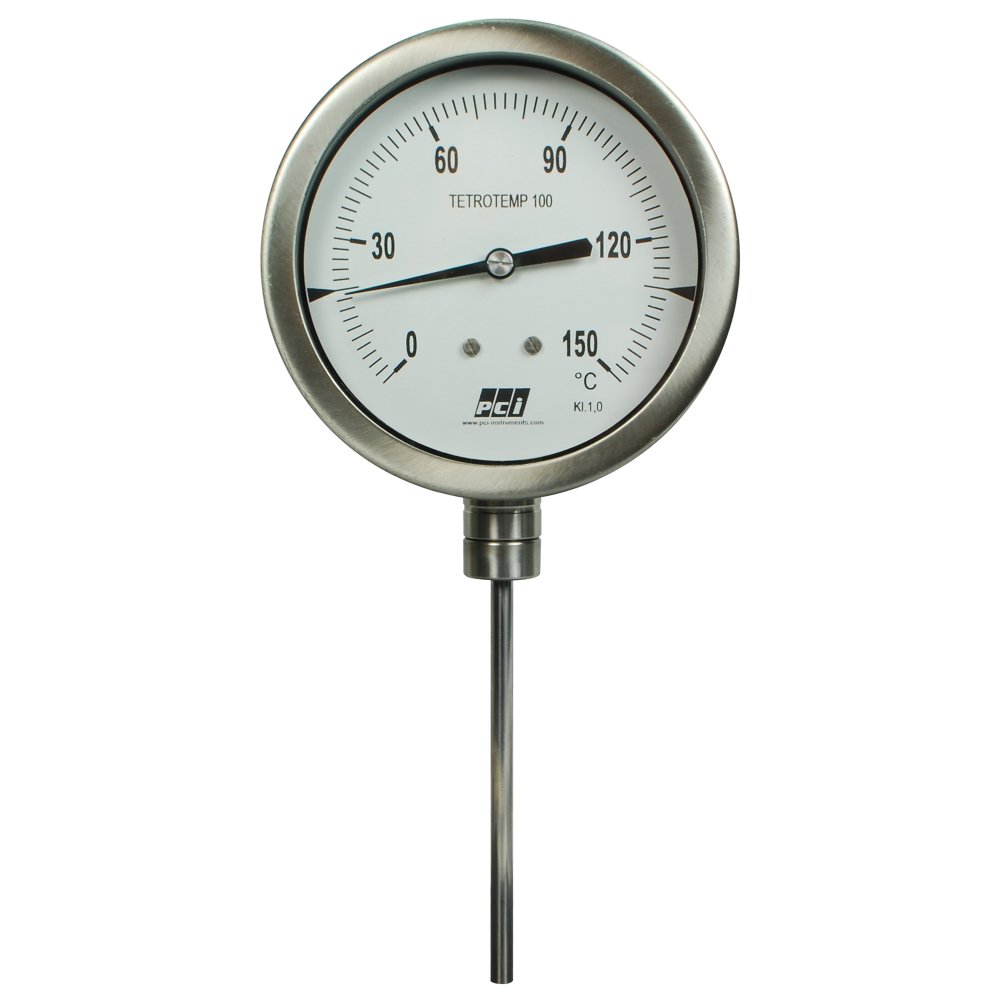

Working Principle: The mechanism depends on the type of temperature gauge. Common mechanisms include:
1. Bimetallic Temperature Gauge
- Consists of two different metals bonded together.
- Each metal expands at a different rate when heated.
- Temperature change causes the strip to bend or twist.
- This movement drives a pointer on the dial to show temperature.
2. Liquid-in-Glass Gauge
- Uses a liquid such as mercury or alcohol.
- As temperature rises, the liquid expands and rises in a calibrated tube.
- The liquid level corresponds to the temperature.
3. Digital Temperature Gauge
- Uses electronic sensors (RTD or thermocouple).
- Temperature changes alter electrical resistance or voltage.
- The signal is processed and shown digitally.
Primary Use: The primary use of a temperature gauge is to monitor and control temperature in systems to:
- Ensure safe operating conditions
- Maintain process efficiency
- Prevent overheating or thermal damage
Common Applications: Temperature gauges are widely used in:
- Industrial machinery and processes
- Boilers and steam systems
- HVAC systems
- Chemical and pharmaceutical industries
- Food processing and refrigeration
- Power plants
- Automobiles (engine temperature)
- Medical and laboratory equipment