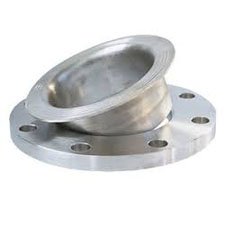
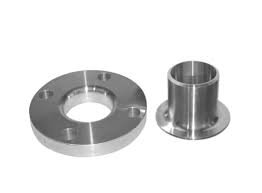

1. Working Principle
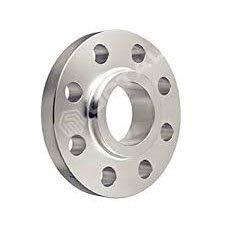
The Lap Joint flange works through Mechanical Compression without Fixed Attachment:
-
Alignment: Because the backing flange is loose, it can be rotated freely. This makes it incredibly easy to align the bolt holes with the mating flange, even if the piping is slightly twisted.
-
Sealing: When the bolts are tightened, the backing flange presses against the back side of the stub end’s flare. This flare is then squeezed against a gasket and the face of the mating flange to create the seal.
-
Flow Path: The fluid only ever touches the inside of the stub end; it never comes into contact with the backing flange itself.
2. Primary Use
The primary use of a Lap Joint flange is for Systems Requiring Frequent Disassembly or Using Expensive Materials.
It is preferred when:
-
Frequent Cleaning/Inspection is needed: Since the flange rotates, it can be quickly disconnected and reconnected without struggling with bolt hole alignment.
-
Corrosion Resistance is needed at low cost: Using a high-alloy stub end with a carbon steel backing flange saves significant money on large-scale projects.
-
Limited Space: It is useful in tight spots where rotating the entire pipe to line up bolt holes is impossible.
3. Common Applications
Lap Joint flanges are prevalent in industries where maintenance is a daily reality or material costs are high:
| Industry | Application |
| Chemical Processing | Used in corrosive lines where high-alloy stub ends (like Monel or Titanium) are required. |
| Pulp and Paper | Systems that require regular internal cleaning or section replacements. |
| Water Treatment | In low-pressure, large-diameter piping where easy bolt alignment is a priority. |
| Food & Beverage | In non-sanitary utility lines where frequent dismantling for inspection occurs. |