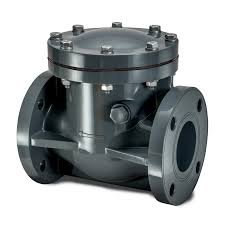
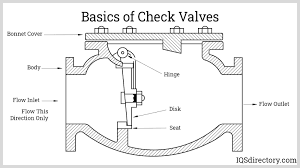
1. Working Principle
The valve works based on a Pressure Differential:
-
Forward Flow (Opening): When the pressure on the inlet side exceeds the “cracking pressure” (and any spring or gravity force), the internal component (disc/ball) is pushed away from the seat, allowing fluid to pass.
-
Reverse Flow (Closing): If the flow slows down or tries to reverse, the pressure on the outlet side becomes higher. This “backpressure,” often assisted by gravity or a spring, pushes the disc or ball back against the seat, instantly sealing the path and preventing backflow.
2. Primary Use
The primary use of a check valve is Backflow Prevention.
It is a safety and functional necessity used to:
-
Protect Equipment: Prevents fluid from slamming back into a pump or compressor when it shuts off, which could cause “reverse rotation” and mechanical failure.
-
Prevent Contamination: Ensures that “dirty” water or chemicals cannot flow back into a clean water supply.
-
Maintain Prime: Keeps liquid in the pipes so that pumps don’t have to be “re-primed” every time they start.
3. Common Applications
Check valves are used in almost every system where a pump or gravity is involved:
| Type | Common Application |
| Swing Check | Wastewater systems and large water pipelines (low resistance). |
| Ball Check | Sump pumps and slurry lines (the ball “cleans” the seat as it rotates). |
| Lift Check | High-pressure steam or air lines where a very tight seal is needed. |
| Foot Valve | Placed at the very bottom of a well or intake pipe to keep the pump primed. |
| Duckbill Valve | Sewage outfalls into the ocean; allows waste out but keeps seawater from entering. |