
1. Working Principle
The working principle of a gate valve is based on linear motion:
-
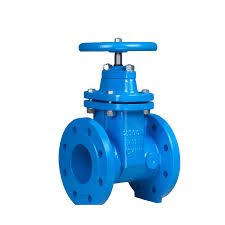
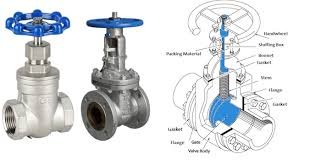
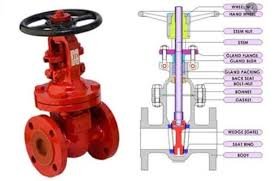
Opening: When you turn the handwheel counter-clockwise, the stem rotates and lifts the gate upward into the bonnet. Because the gate moves completely out of the flow path, it creates a “Full Bore” opening.
-
Closing: Turning the handwheel clockwise lowers the gate into the flow path. The gate wedges itself between the valve seats to create a tight, leak-proof seal.
2. Primary Use
The primary use of a gate valve is Isolation.
Because it provides a straight-through, unobstructed flow path when fully open, it is the preferred choice when:
-
Minimal Pressure Drop is required (it offers almost zero resistance to flow).
-
Bidirectional Flow is needed (it can block fluid coming from either direction).
-
Slow Operation is desired to prevent Water Hammer (the multi-turn operation ensures the valve closes slowly).
3. Common Applications
Gate valves are used across a wide range of industries due to their durability and simplicity:
| Industry | Application |
| Water & Sewage | Municipal water distribution, wastewater treatment, and irrigation systems. |
| Oil & Gas | Crude oil pipelines, refineries, and tank farms (especially “Slab” gate valves). |
| Power Plants | Cooling water systems and low-pressure steam lines. |
| Mining | Handling abrasive slurries (specifically using Knife Gate Valves which can “cut” through solids). |
| Marine | Ballast systems and fuel oil transfer on ships (often using non-rising stems to save space). |