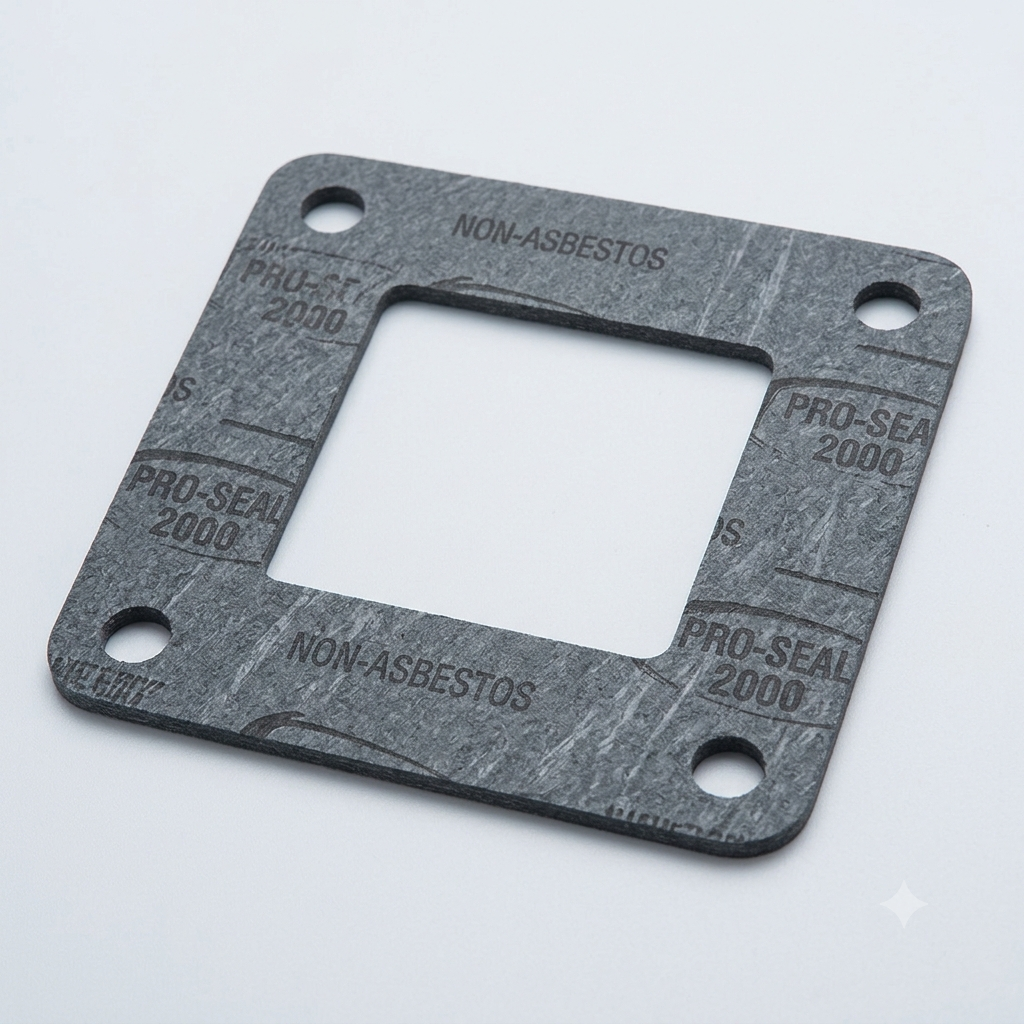
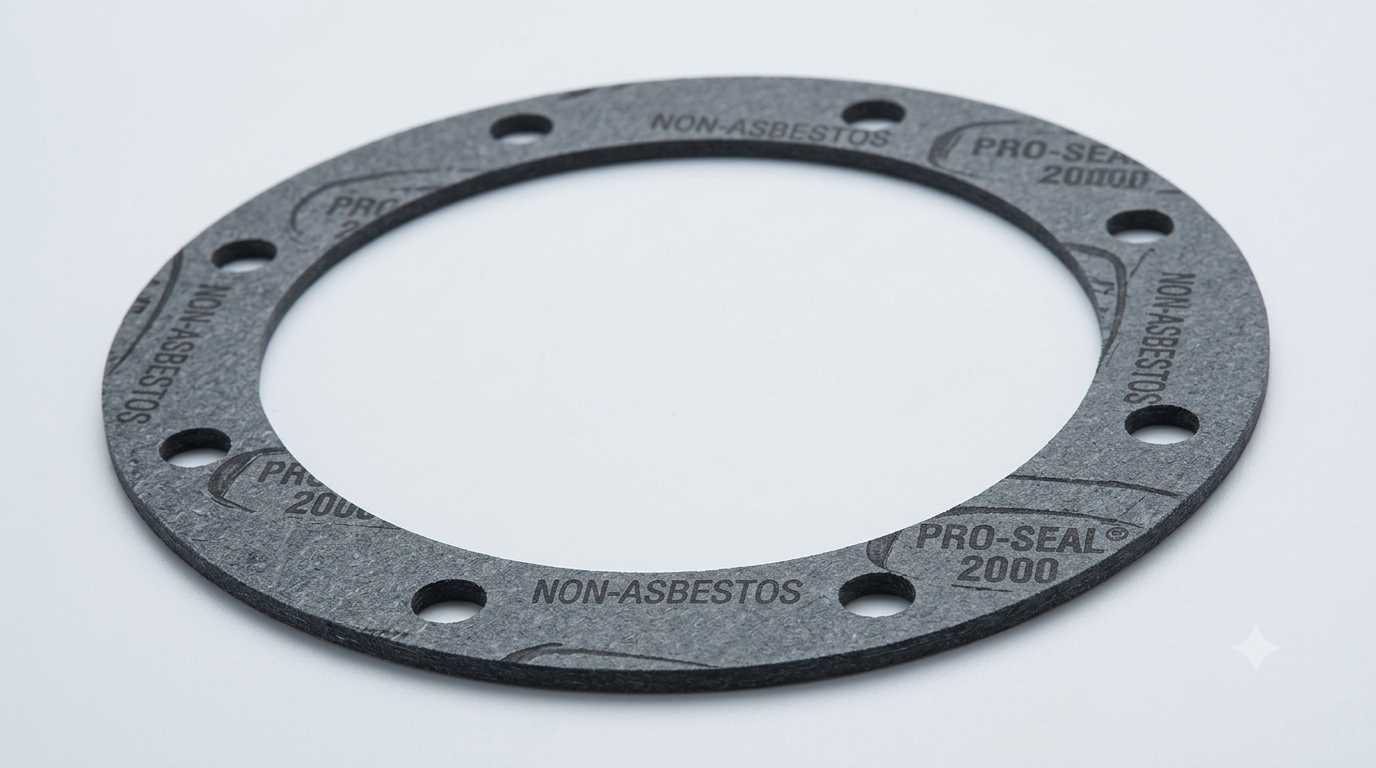
Working Principle: The mechanism relies on material compressibility and surface conformity:
- Sheet Material Composition
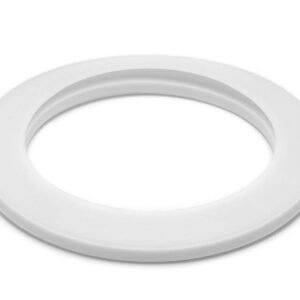
- Made from fibers (aramid, cellulose, or synthetic) bound with an elastomeric binder, or from pure materials like rubber, PTFE, or expanded graphite.
- Manufactured in flat sheets, then cut or punched into the required gasket shape and bolt pattern.
- Compression Under Bolt Load
- When installed between two flanges and bolted down, the soft sheet material compresses.
- The material flows slightly into surface imperfections, scratches, and irregularities on the flange faces.
- Sealing by Conformity
- Unlike metallic gaskets that rely on precise grooves, flat sheet gaskets seal purely by conforming to the flange surface under compressive stress.
- The compressed material creates a barrier that blocks the escape of fluid or gas.
- Elastic Recovery
- Depending on material composition, the gasket retains some elasticity, allowing it to maintain sealing contact despite minor flange movement, vibration, or thermal expansion.
Primary Use: The primary use of a flat sheet gasket is to provide a cost-effective, reliable seal for flanged joints operating under low to moderate pressure and temperature, preventing leakage of liquids, gases, or steam.
Common Applications: Flat sheet gaskets are widely used in:
- General industrial piping systems
- Water and low-pressure steam systems
- HVAC ductwork and equipment flanges
- Pumps, valves, and small equipment connections
- Food and beverage processing (with FDA-approved materials)
- Chemical processing (material-dependent, e.g., PTFE for aggressive chemicals)
- Automotive engine and exhaust systems
- Tank and vessel manway covers