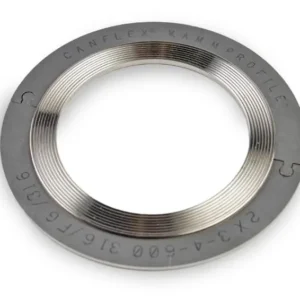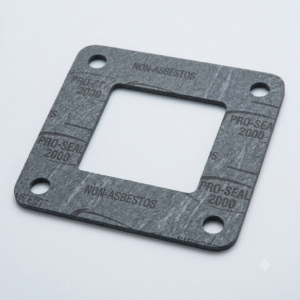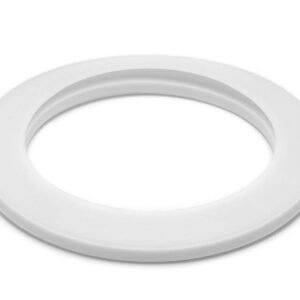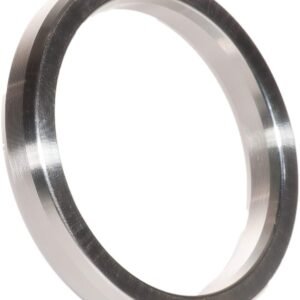
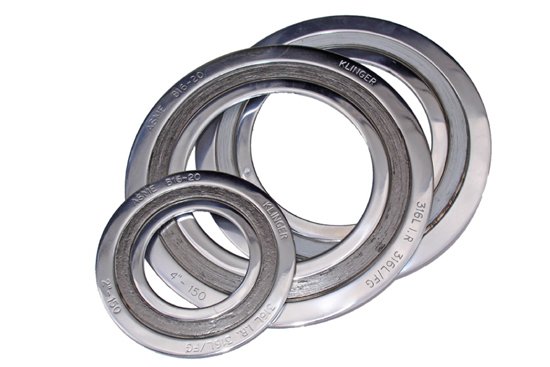
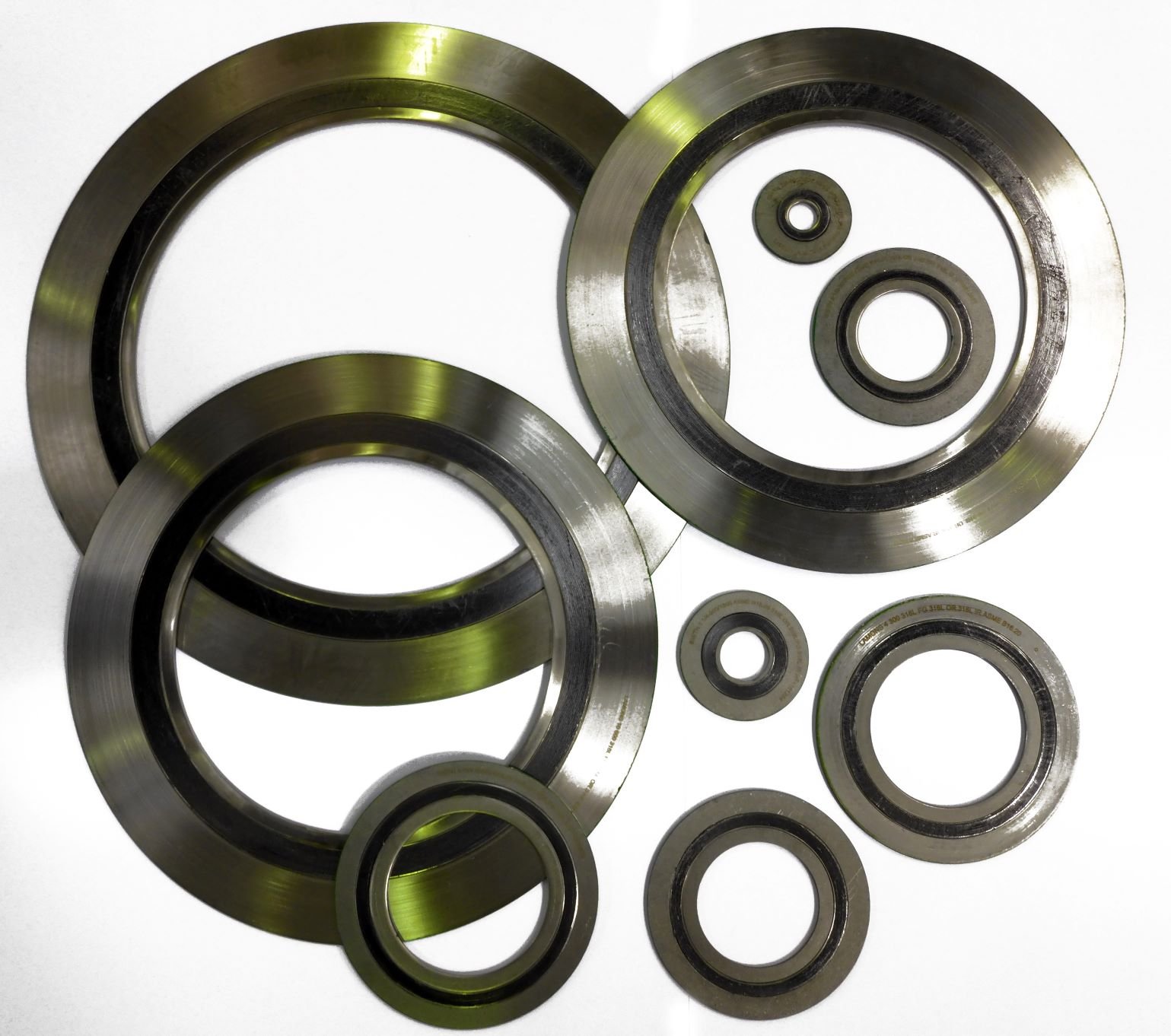
Working Principle: The mechanism relies on a composite structure and controlled compressibility:
- Metal Winding (Outer/Inner Rings)
- A preformed metal strip is wound into a V-shaped or hoop-shaped profile.
- Provides mechanical strength, resilience, and shape retention.
- Acts as a spring, maintaining sealing force even under fluctuating loads.
- Filler Material
- A soft, compressible material (graphite, PTFE, or ceramic) is wound alternately with the metal strip.
- Fills microscopic irregularities on the flange surface.
- Provides the primary sealing barrier against leakage.
- Compression and Recovery
- When bolted between two flanges, the gasket compresses under load.
- The metal winding allows it to flex and recover slightly with pressure or temperature changes, maintaining a tight seal even during thermal cycling or vibration.
- Centering/Guide Rings
- Inner and outer rings help with alignment, prevent blowout, and protect the windings from damage during installation.
Primary Use: The primary use of a spiral wound gasket is to provide a reliable, leak-tight seal between flanged connections in high-pressure and high-temperature systems, while accommodating thermal expansion, vibration, and pressure fluctuations.
Common Applications: Spiral wound gaskets are widely used in:
- Oil and gas refineries and pipelines
- Petrochemical and chemical processing plants
- Power generation plants (steam and turbine systems)
- Heat exchangers and pressure vessels
- High-pressure steam and hot water systems
- Marine and offshore platforms
- Aerospace and defense equipment
- Flanged pipe joints requiring critical sealing performance