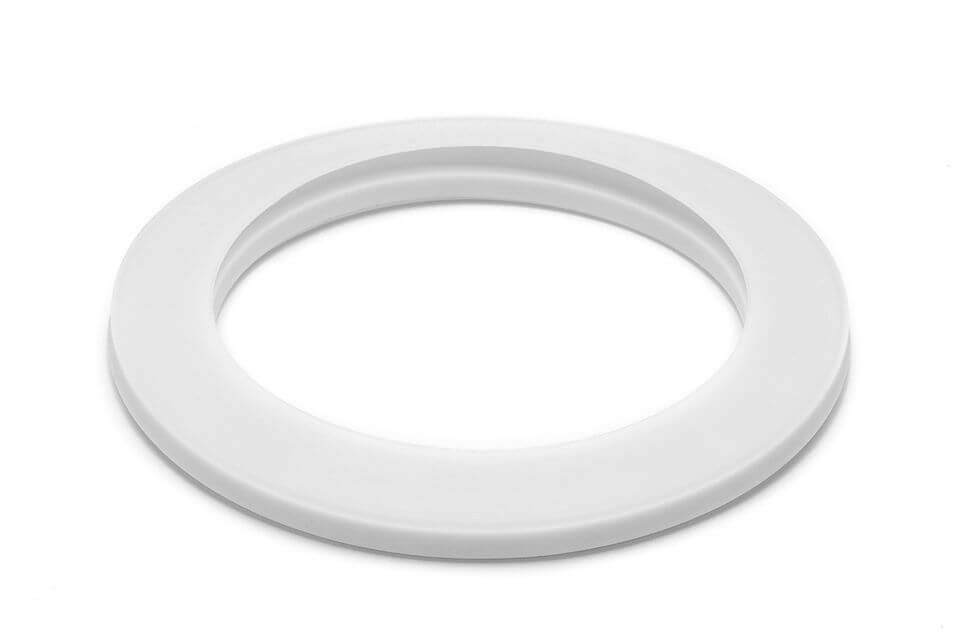
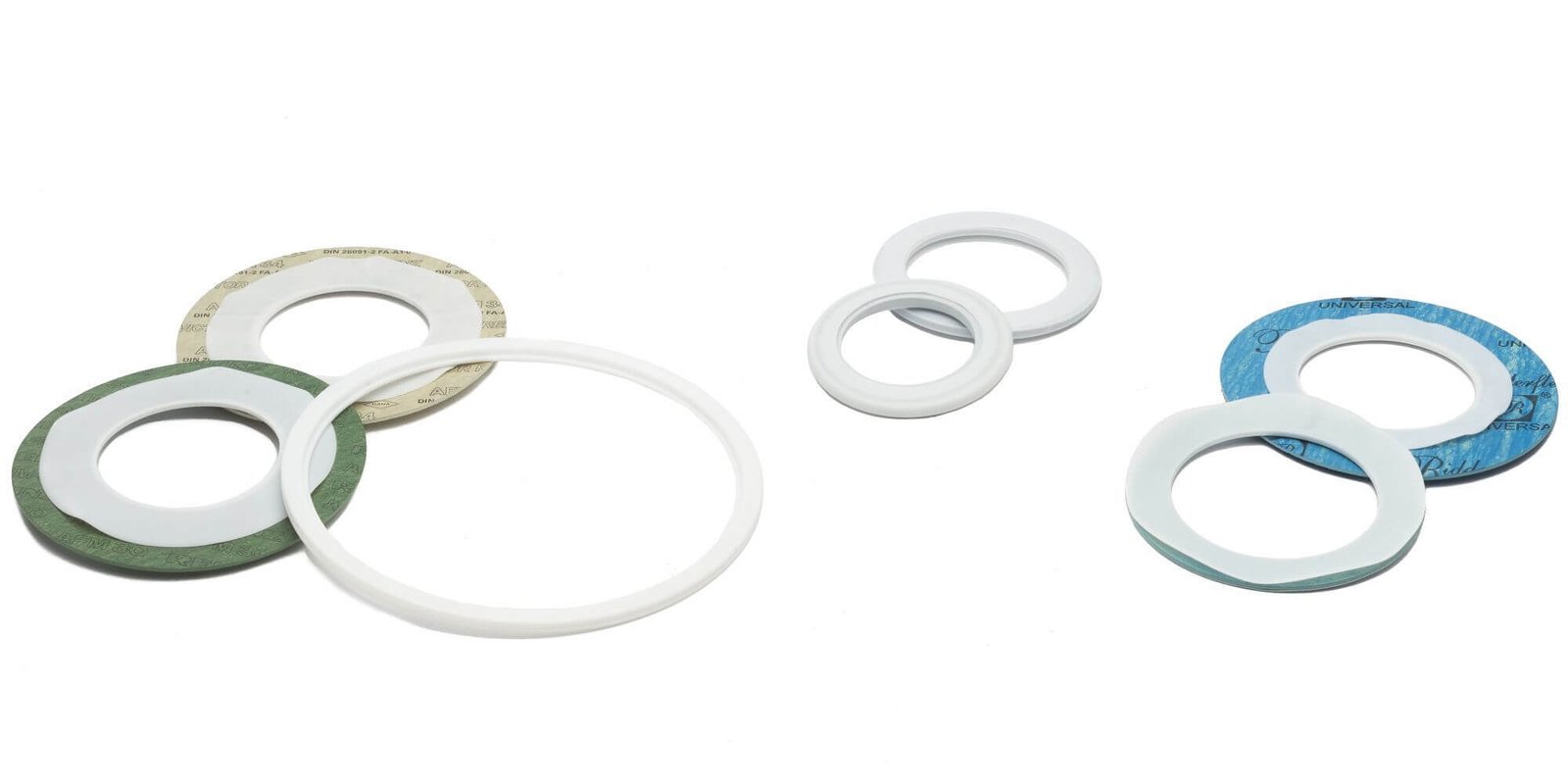
Working Principle: The mechanism relies on a dual-layer composite structure:
- Inner Core Material
- A soft, compressible filler (rubber, fiber, or graphite) forms the core of the gasket.
- Provides the resilience, elasticity, and compressibility needed to conform to flange surface irregularities.
- PTFE Outer Envelope
- A thin PTFE sheet fully wraps and seals the inner core, isolating it completely from the process media.
- PTFE is virtually inert, resisting attack from acids, alkalis, solvents, and most aggressive chemicals across a wide pH range.
- Compression and Conformity
- When bolted between flanges, the envelope compresses, allowing the soft inner core to deform and flow into surface imperfections.
- The PTFE jacket transmits this compressive sealing action while remaining the only surface in contact with the process fluid.
- Chemical Isolation
- Since the inner core never contacts the process media, the gasket can safely handle corrosive or reactive substances that would otherwise degrade the core material.
- The non-stick PTFE surface also prevents the gasket from sticking to flange faces, easing removal and replacement.
Primary Use: The primary use of a PTFE envelope gasket is to provide a chemically resistant, reliable seal for flanged joints handling highly corrosive, reactive, or high-purity fluids, while maintaining good sealing performance under moderate pressure and temperature.
Common Applications: PTFE envelope gaskets are widely used in:
- Chemical and petrochemical processing plants
- Pharmaceutical and biotechnology industries
- Acid and caustic handling systems
- Food and beverage processing (high-purity requirements)
- Pulp and paper industry
- Water and wastewater treatment (corrosive media)
- Piping systems handling solvents and reactive chemicals
- Semiconductor and high-purity fluid handling systems